Roof Ventilation
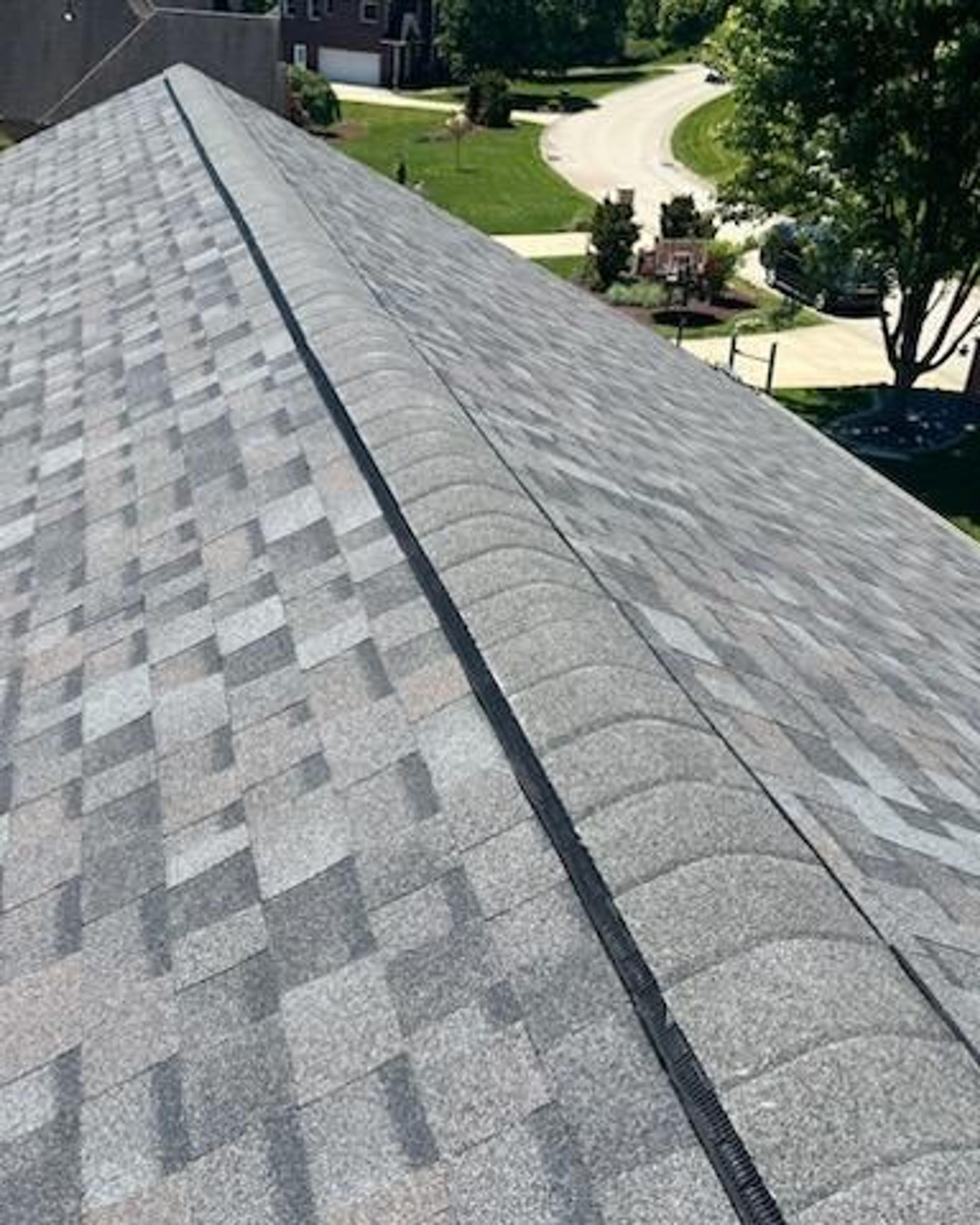
Balanced ridge and soffit ventilation that lets your attic breathe - cooler summers, fewer ice dams, longer roof life.
A roof that can't breathe cooks your shingles from below in summer and traps moisture in winter. Proper ventilation balances intake at the soffits with exhaust at the ridge so air moves through the attic the way it should.
We assess your existing setup and add ridge vents, soffit vents or both to get the airflow right. Better ventilation means a more comfortable home, lower energy bills, fewer ice dams and a roof that lasts closer to its full lifespan.
Roof Ventilation near you
We provide roof ventilation across Westmoreland County, including these communities.
Common roof ventilation questions
Why does attic ventilation matter for my roof?
Heat and moisture trapped in the attic cook shingles from below in summer and condense into the decking in winter — both shorten roof life dramatically. Balanced ventilation moves that air out passively. It is the least visible part of the roof system and one of the most consequential.
What are the signs of poor attic ventilation?
Ice dams every winter, a second floor that will not cool down in summer, frost or damp on the underside of the roof deck, curling shingles on a roof that should not be old enough for it, and mold spotting on attic framing. Any of these is worth a look.
What is balanced ventilation?
Air in low, air out high — intake at the soffits matched to exhaust at the ridge. The balance matters: exhaust without intake pulls conditioned air from the house, and intake without exhaust just dead-ends. We calculate both sides from the attic square footage and fix the side that is short.
Need roof ventilation? Let's talk.
Tell us about your home and get a free, no-pressure inspection.